•
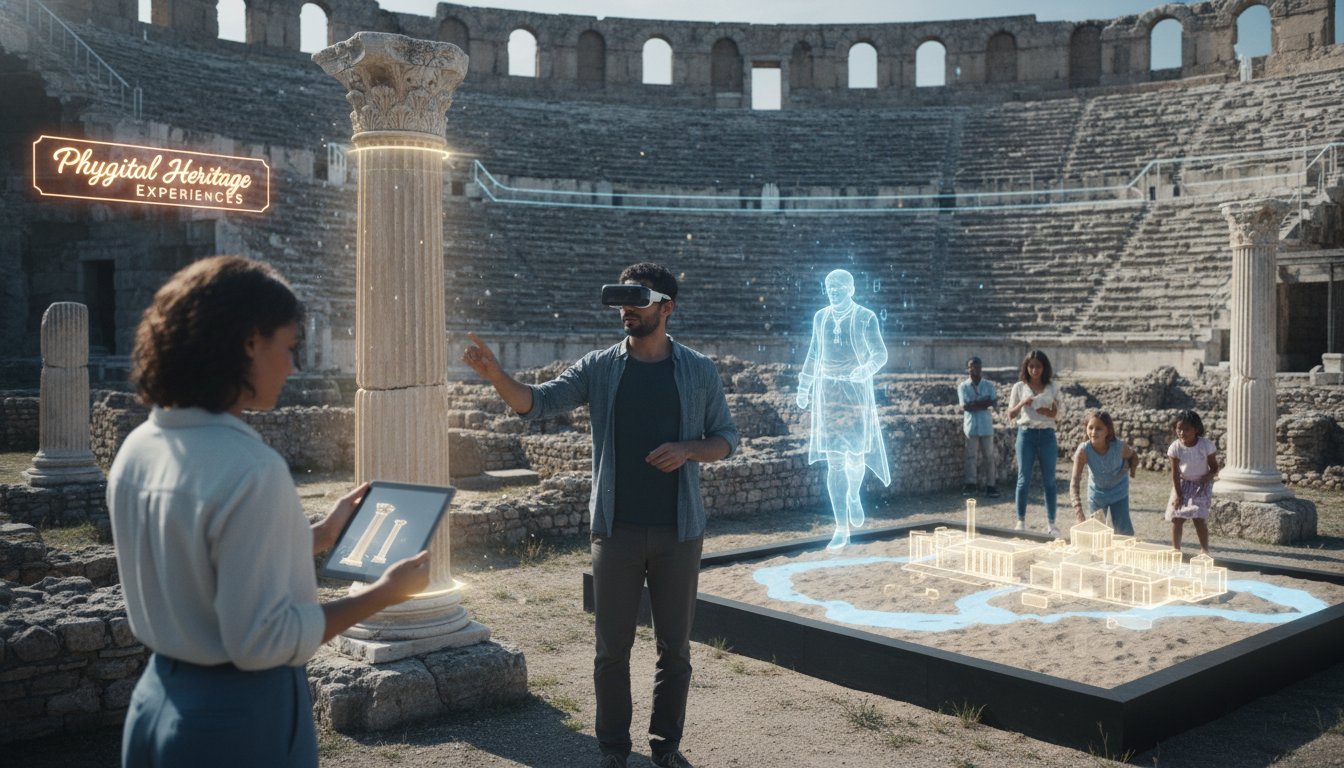
Dubai is leading the ‘phygital’ trend by blending physical sites with digital layers.
•
Al Shindagha Museum uses AR to bring pearl diving history to life for modern audiences.
•
The Dubai Creative Economy Strategy provides the framework for these tech-driven cultural projects.
•
Legal and administrative compliance remains vital for tech firms developing cultural IP in the UAE.
•
Augmented Reality Heritage is becoming a cornerstone of the city’s tourism and education sectors.
In This Report
The Shift Toward Phygital Cultural Experiences
Walking through the narrow sikkas of the Al Fahidi Historical Neighborhood, visitors are no longer just looking at coral-stone walls. They are witnessing a transformation where the physical world meets the digital. This convergence, often called ‘phygital,’ is at the heart of Dubai’s latest cultural push. By integrating Augmented Reality Heritage into the city’s oldest districts, the Dubai Culture & Arts Authority is making history accessible to a generation that consumes information through screens.
This shift isn’t just about flashy visuals. It is a strategic move to preserve the intangible stories of the UAE—the songs of pearl divers, the specific techniques of dhow building, and the social etiquette of the majlis—that might otherwise fade. Through mobile applications and AR headsets, these stories are superimposed onto the physical environment, allowing a visitor to see a bustling 19th-century trade hub while standing in a quiet courtyard today.
The Practical Impact of Augmented Reality Heritage
The implementation of Augmented Reality Heritage has fundamentally changed how museums like Al Shindagha operate. Instead of static plaques, visitors use tablets to trigger animations that show the historical expansion of the Dubai Creek. According to UNESCO, the preservation of such cultural sites is critical for maintaining local identity in a rapidly globalizing world. Dubai’s approach ensures that while the city grows into a futuristic metropolis, its roots remain visible and interactive.
For tourists, the experience is transformative. They can point their devices at an empty stretch of water and see a fleet of traditional boats appear, complete with historical data about the goods they carried. This level of immersion increases engagement times and educational retention, making Augmented Reality Heritage a powerful tool for schools and researchers alike. It moves the museum experience from a passive walk-through to an active exploration of the past.
Navigating the Legal and Business Framework
Building these high-tech cultural experiences requires a complex collaboration between government entities, tech developers, and historical consultants. For international firms entering the Dubai market to provide these solutions, navigating the local regulatory environment is a prerequisite. Establishing a presence often involves significant paperwork, where many businesses utilize a Power of Attorney Dubai to manage their administrative and legal affairs efficiently. This ensures that intellectual property rights for digital reconstructions are protected under UAE law.
Furthermore, the Dubai Creative Economy Strategy aims to double the contribution of the creative industries to the city’s GDP. This means more funding for projects that utilize Augmented Reality Heritage, but it also means stricter standards for historical accuracy and data privacy. Developers must work closely with historians to ensure that the digital layers they create are not just entertaining but are authentic reflections of Emirati culture, as documented by sources like the Encyclopedia Britannica.
Future-Proofing the UAE’s Cultural Identity
As the technology matures, we can expect Augmented Reality Heritage to move beyond museums and into the very fabric of the city’s streets. Imagine walking through Deira and seeing the evolution of the Gold Souq through a pair of lightweight AR glasses. This constant presence of history in the modern world helps maintain a sense of continuity for residents and provides a deeper layer of meaning for the millions of tourists who visit annually.
The success of Augmented Reality Heritage in Dubai serves as a blueprint for other cities in the region. By treating history as a living, breathing asset rather than a relic of the past, Dubai is ensuring its cultural narrative remains relevant. The integration of Augmented Reality Heritage is not just a technological feat; it is a commitment to the idea that the future of the city is built directly upon the foundations of its past. As more sites adopt these tools, the line between history and the present will continue to blur in the most engaging way possible.
The role of Augmented Reality Heritage will only grow as AI and spatial computing become more sophisticated. We are entering an era where the walls of a museum can talk, and the ground beneath our feet can show us where we came from. For a city that moves as fast as Dubai, these digital anchors are more important than ever.
For more insights on this topic, visit Dubai Culture.
Phygital Heritage Planner
Customize your Dubai Culture digital experience
Interactive Enhancements
Estimated Total
0 AED
Duration
0 mins
Frequently Asked Questions
Visitors can engage with phygital heritage at sites like Al Fahidi Historical Neighbourhood, where digital overlays bring ancient architecture to life.
AR integrates historical data and 3D models into physical locations, allowing users to see reconstructions of the city’s early trading ports.
Most experiences are accessible via smartphones or tablets using dedicated apps or QR codes provided at historical landmarks.
1. Introduction: Safeguarding Creativity in Dubai’s Thriving Arts Scene
Protecting Your Creative Legacy
Dubai has rapidly become a global hub for culture and Artists and Creatives in Dubai, driven by strategic visions like ‘We the UAE 2031’ to be a regional and global talent center [2]. The creative sector is a significant economic contributor, adding AED 21.9 billion (4.6% of GDP) in Dubai in 2022 and employing over 175,000 people [4]. Federally, creative industries contributed AED 54.4 billion (3.5% of GDP) in 2022 [3]. This growth is supported by a modern legal and regulatory environment [3].
For artists, designers, writers, performers, and other creatives, especially the large expatriate community, proactive legal management is crucial. Protecting intellectual property, ensuring fair contracts, and planning for the future are vital for a sustainable career. Neglecting these legal aspects can lead to infringement, exploitation, and uncertainty for their work.
This report outlines essential legal steps for creatives in Dubai, covering IP protection (copyright, trademark), contracts, estate planning (Wills, POAs) for expats, key authorities, regulations (Dubai Arts Law), support mechanisms, and finding legal help (Artist Legal Guide Dubai, Creative Rights UAE, Power of Attorney Dubai Expats, Protecting Artwork UAE).
2. Securing Your Intellectual Property (IP) under UAE Law
Navigating the UAE’s Modernized IP Landscape
The UAE has a comprehensive and modern legal framework for IP protection, aligned with international standards [3]. Key federal laws from 2021 include:
Federal Decree-Law No. 38 of 2021 on Copyrights and Neighbouring Rights: Protects literary, artistic, and scientific works, supporting the digital economy and creators [2, 9].
Federal Law No. 11 of 2021 on the Regulation and Protection of Industrial Property Rights: Covers patents, designs, etc., relevant for applied arts [9].
Federal Law No. 36 of 2021 on Trademarks: Protects brand identity [10].
The Ministry of Economy (MoEc) is the federal authority for IP registration and protection, offering online services [9]. The UAE combines legislation with digital enforcement and support [5].
Copyright Deep Dive (Creative Rights UAE)
Copyright is the primary IP for most creative output. Federal Decree-Law No. 38 of 2021 grants automatic protection to original works from creation [10].
Scope: Covers diverse works like literary, software, musical, audiovisual, architectural, fine arts, photographic, and applied arts [10, 13]. Excludes official documents and news [13].
Duration: Generally, life of the author plus 50 years [12]. Specific terms: applied art (25 years from publication), cinematic/photographic/audiovisual (50 years from creation), works under employment/contract (50 years from creation, unless contract specifies) [12, 13].
Registration: Automatic protection exists [10], but voluntary registration with the MoEc [13] is highly recommended for evidence of ownership and enforcement [12].
Moral vs. Economic Rights: UAE law distinguishes Economic Rights (commercial use, transferable) and Moral Rights (personal, non-waivable – attribution, integrity, etc.) [12, 18]. Moral rights are perpetual and inalienable [12].
Ownership: Differs from “work made for hire” [20]. Copyright in employee/commissioned works vests with the creator unless explicitly assigned in a specific, written contract [12]. Assigning rights to five or more future works in one agreement is void [19].
Copyright: Primary protection for original visual works (paintings, photos, etc.) [13]. MoEc registration advised [12].
Industrial Design: Protects aesthetic appearance of products [9]. Requires MoEc registration [13]. 20 years protection [13].
Trademark: Artist’s signature/style as a brand identifier [10].
Protecting Artwork UAE involves using these rights.
3. Crafting Clear Contracts: Agreements for Dubai Creatives
The Role of Contracts
Contracts are vital for defining relationships, expectations, rights (IP), payment, and dispute resolution [23]. UAE-specific legal assistance is crucial [23].
Common Agreement Types
Commission Agreements: For new work. Define scope, timeline, payment, IP ownership/usage [24].
Licensing Agreements: For using existing work. Define scope, territory, duration, exclusivity, restrictions, payment [23].
Collaboration Agreements: For joint projects. Outline roles, IP ownership/management, revenue/credit sharing.
Employment Contracts: For employed creatives. Must include UAE-compliant IP assignment if employer is to own rights [12].
Essential Clauses under UAE Law
Key clauses: Parties, Scope, Payment Terms, Intellectual Property Rights (explicit ownership/license, specific assignment requirements [20], respect for Moral Rights [12], avoid future works assignment [19]), Warranties [24], Delivery/Acceptance [24], Term/Termination [24], Governing Law/Jurisdiction (UAE law, specify courts) [24], Confidentiality.
Avoiding Pitfalls
Beware of ambiguity, unenforceable moral rights waivers [12], improper IP assignment [20], and unfair terms [23]. Use contracts drafted/reviewed by UAE legal counsel [12].
4. Planning Your Legacy: Wills and Power of Attorney for Expat Creatives
The Unique Needs of Artists
Estate planning for Artists and Creatives in Dubai includes tangible (artwork) and intangible (IP, royalties) assets, requiring specific planning.
Without a registered Will, UAE assoets could be subject to default UAE law, potentially Sharia principles, conflicting with personal wishes/guardianship choices [41, 42].
Registered Wills: Provide certainty. Options:
DIFC Wills Service: For non-Muslims, common law basis. Covers Dubai/RAK assets [39, 41, 46]. Various types (Full, Property, Guardianship) [39]. Online process [39]. Benefits: certainty, freedom of distribution, efficient probate [41, 46]. Costs: significant fees [39].
ADJD Wills: Covers assets in all Emirates [51]. Lower fees [51]. Requires Arabic translation [51]. Probate via ADJD courts [41].
UAE Notary Public Wills (Onshore): Registered before Notary Public. Governed by UAE Federal Laws, require Arabic/bilingual drafting [41, 47]. Probate via onshore courts.
Choose based on asset location and legal framework preference. Drafting involves identifying beneficiaries (artwork, IP), executors, and guardians [47].
Power of Attorney (POA) for Artists and Creatives in Dubai (Power of Attorney Dubai Expats)
A POA appoints an agent to manage UAE affairs if you are absent/incapacitated [40].
Purpose: Allows a trusted person to act on your behalf (financial, legal, business, property) [40].
Types: General POA (broad) or Special POA (limited tasks) [40, 53].
Applications: Managing bank accounts, paying bills, signing contracts (if specified), managing property, IP tasks [14, 40, 54].
Process: Select agent [40]. Draft carefully (use legal professionals) outlining specific powers [40]. Must be in Arabic or bilingual with certified translation [52]. Mandatory notarization [40, 52]. Authentication/legalization for international use [40]. Registration needed for certain transactions (e.g., real estate) [40].
Notarization and registration ensure validity [39].
5. Engaging with Dubai’s Creative Ecosystem: Authorities, Regulations, and Support
Key government bodies:
Ministry of Economy (MoEc): Federal IP authority [9].
Dubai Culture & Arts Authority (DCAA): Dubai arts body, licenses, supports, offers Creative Accreditation for Golden Visa [55, 59].
Ministry of Culture (MCY): Federal ministry, supports talent, grants, Golden Visa recommendations [7, 5, 64].
Understanding Dubai Arts Law: Recent Developments
Federal Decree-Law No. (29) of 2024 “On Empowering the Arts Sector”: Regulates non-profit “Art Institutions” [15, 69]. Aims to encourage creation, attract talent, unify frameworks [15]. Establishes licensing, allows foreign institutions, provides incentives (tax, customs), permits endowments [15, 69, 71]. Maintains state oversight [15, 69].
Opportunities for Creatives
Creative & Talented Accreditation (DCAA): Pathway to Golden Visa [59, 60, 74].
Cultural Visa / Golden Visa: Long-term residency for talent, including Artists and Creatives in Dubai [60, 66]. Benefits: stability, sponsorship, business ownership [66].
Grants and Funding: Opportunities from MCY and others [5, 65].
Public Art Initiatives: DCAA strategy creates commission opportunities [56].
The link between accreditation and Golden Visa is a strong incentive [60, 66].
6. Finding Legal Guidance: Resources for Artists and Creatives in Dubai (Artist Legal Guide Dubai)
The Need for Specialized Advice
UAE/Dubai law in IP, contracts, art, and expat estate planning requires specialized expertise [23].
Identifying Specialized Law Firms
Look for firms/lawyers experienced in: Art Law [27, 31], IP Law [10, 25], Media/Entertainment Law [23, 26], Technology Law [26], Private Client/Wills & Estates [31, 39]. Choose firms with UAE experience [25]. Directories help [11, 25].
Utilizing Online Legal Resources and Guides
Government Websites: MoEc, DCAA, MCY for official info [9, 55, 63].
Specialized Online Providers: For standard expat Wills/POAs (Juriszone, POAPRO Dubai Power of Attorney, Legal Inz) [39, 47, 51].
Legal Information Portals: General info, verify accuracy.
Handbooks/Guides: General principles [76, 77], but supplement with UAE-specific advice [12].
Role of Collective Management Organizations (CMOs)
CMOs like EMRA for music manage rights and royalties [78, 3].
Finding the right provider with UAE expertise is key [25].
7. Essential Legal Steps: A Practical Checklist for Dubai Creatives
IP Protection: Identify assets, understand rights (Copyright, Trademark, Design), register key rights with MoEc [12, 13], ensure contracts have UAE-compliant IP clauses [20], respect Moral Rights [12].
Contracts: Use written agreements, seek UAE legal review [23], scrutinize key clauses [24], avoid pitfalls.
Estate Planning (Expats): Draft and register a Will (DIFC, ADJD, or Notary) [39, 41, 47], execute a POA [40].
Engagement & Awareness: Stay informed, leverage DCAA/MCY support [59, 60], identify legal help before needed [25].
Record Keeping: Maintain meticulous records (process, contracts, IP, communications, financials) [12].
8. Frequently Asked Questions (FAQs)
(a) How can Artists and Creatives in Dubai legally protect their creative works under UAE law?
Automatic copyright protection upon creation (Fed. Decree-Law 38/2021) for original works [9]. Includes economic and non-waivable moral rights [12]. Voluntary MoEc copyright registration advised for enforcement [12]. Trademark registration for branding (MoEc) [13]. Industrial Design for product appearance [9]. Use rights and contracts (Protecting Artwork UAE).
(b) Why are Wills and Power of Attorney particularly important for expat creatives in Dubai?
For non-Muslim expats, registered Wills ensure UAE assets/guardianship follow wishes, avoiding default rules [39, 41, 42]. POAs allow appointing an agent to manage UAE affairs if absent/incapacitated [40]. Both require specific UAE procedures [39, 40].
(c) Where can Artists and Creatives in Dubai find reliable legal guidance specific to Dubai’s creative sector?
Seek lawyers with UAE expertise in Art Law, IP, Media/Entertainment, Private Client [23, 27]. Use directories [11, 25]. Government websites (MoEc, DCAA, MCY) [9, 55, 63]. Online services for standard Wills/POAs [39]. CMOs like EMRA [78]. Supplement general guides with UAE advice [12].
9. Conclusion: Proactive Planning for a Sustainable Creative Future in Dubai
Dubai offers great opportunities, but requires proactive legal planning. Protecting IP, using compliant contracts, and estate planning (especially for expats) are fundamental. Engaging with support entities and staying informed is also key. Recognizing the need for specialized UAE legal advice is crucial. By taking these steps, Artists and Creatives in Dubai protect their work, build sustainable careers, and ensure their legacy thrives in Dubai.
For more details about the beauty in Dubai, visit Dubai Culture website..
Ministry of Economy licenses Emirati Musicians’ Association to safeguard the rights of creators and musicians enhancing competitiveness of UAE’s creative economy, accessed April 25, 2025, https://www.arabbnews.com/english/Government-News.asp?id=3109